
Print and Sign Checklist for a Small-Business Launch
A launch does not need every printed item in the catalog. It needs a coordinated set that helps people find the business, understand the offer, enter confidently, and remember what to do next.
Key takeaways
- Start with the customer path: street identification, entry information, in-store direction, and one clear next step.
- Treat permanent storefront signs and temporary opening messages as different jobs with different approvals and useful lives.
- Budget by priority and dependency instead of relying on a generic marketing percentage.
- Confirm content, artwork, final dimensions, landlord criteria, jurisdiction questions, quantities, finishing, and installation responsibilities before promising a launch date.
- Use trackable URLs or QR codes only after testing the final destination on the actual printed proof.
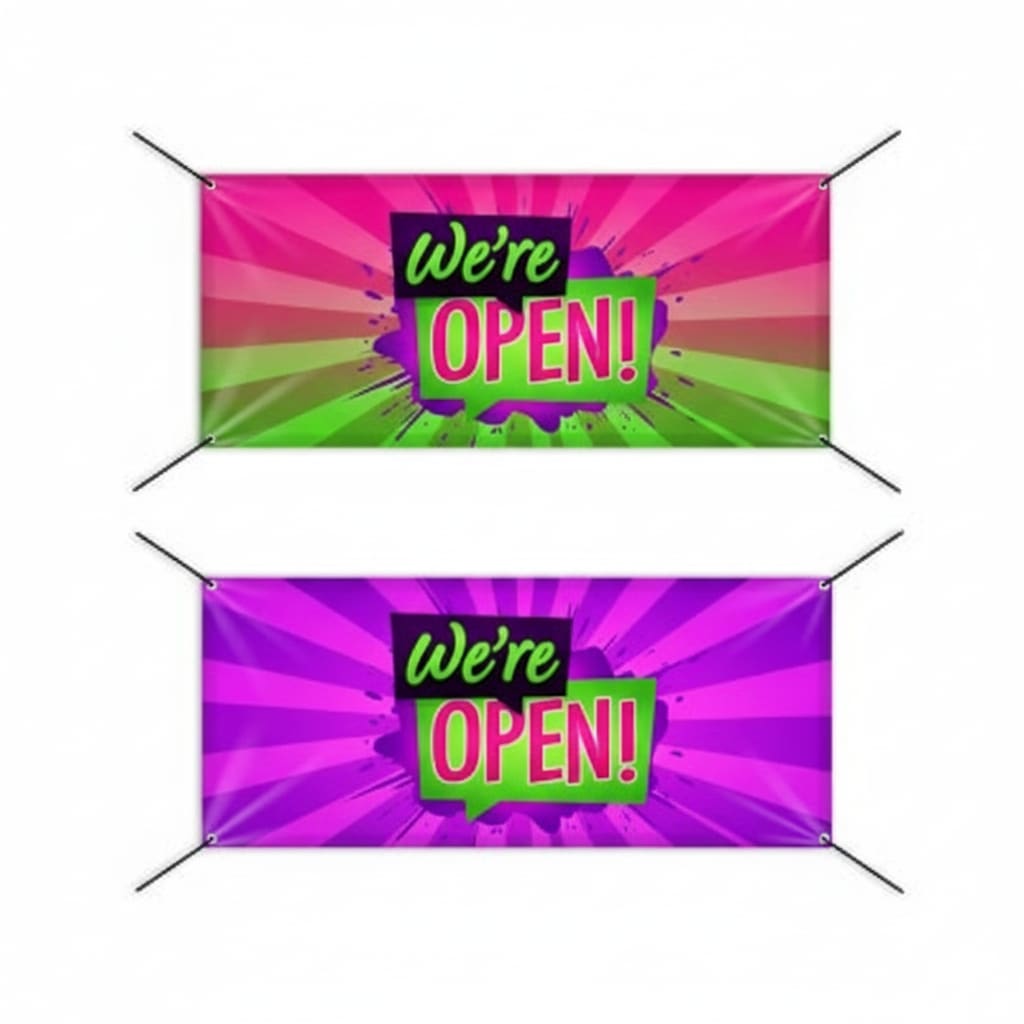
A business launch creates a long wish list: storefront identification, window graphics, an opening banner, menus, cards, flyers, packaging inserts, event displays, and more. The right question is not “What can we print?” It is “What must a customer see at each step?”
For a Phoenix-area storefront, that path may begin from a moving car, a parking aisle, a shaded walkway, or inside a multi-tenant property. Customer-supplied sight lines, glare conditions, landlord criteria, jurisdiction, opening date, and the third-party installation plan should shape the list before quantities and finishes do.
Valley Sign Guys produces signs, graphics, and print pieces from your approved artwork and verified dimensions. Send the sizes, quantities, materials, colors, and requested date for each item. Your property contact, installer, engineer, or electrician handles site measurements, permits, electrical work, access, scheduling, and installation.
Why should launch planning begin with the customer journey?
Map the real sequence from discovery to action:
- Find: Can a first-time visitor identify the building, suite, and entrance?
- Understand: Is it clear what is opening and whether the message is permanent, promotional, or directional?
- Enter: Are door information and wayfinding legible without crowding the glass?
- Choose: Do menus, service sheets, price displays, or product labels answer the next question?
- Return: Is there one accurate website, booking path, or take-away reference?
This sequence prevents a familiar mistake: boxes of attractive handouts arriving while the storefront still looks unidentified or the entry remains confusing.
Which print and sign pieces deserve priority?
Build a compact launch set around the business model. Retail and hospitality may need strong street presence and point-of-purchase information. A professional office may care more about suite identification, directories, privacy graphics, and appointment instructions. A mobile service business may emphasize vehicle or event materials instead of a walk-up storefront.
Contact cards and small leave-behinds
A card, postcard, menu, or service sheet should have one job and only confirmed information. Check the business name, URL, monitored contact method, social handles, prices, dates, and legal disclaimers immediately before approval. Avoid printing a large quantity merely to reduce unit cost when the offer or contact details may still change.
Choose stock and finish based on use: writing, repeated handling, outdoor distribution, food-contact context, mailing equipment, or display in a holder. A finish that photographs well may be difficult to write on or may crack at a fold.
Storefront identification and opening messages
Permanent identification and launch promotion solve different problems. A storefront sign production plan should use customer-verified sign-band dimensions and installer-approved attachment information, plus landlord standards and qualified electrical input when illumination is involved. A grand-opening banner, A-frame, or temporary window message may add urgency, but placement rules and property approval still vary.
Do not let temporary signs cover required visibility, exits, accessibility information, or other regulated messaging. Confirm the address and jurisdiction before assuming a banner or sidewalk display is allowed.
Brochures, flyers, menus, and information sheets
Use a longer piece only when the reader needs more detail than a sign can carry. A brochure can compare services; a menu can organize choices; a flyer can announce one dated event. Each should make the next action obvious and avoid claims, offers, or dates the business cannot support.
Before setting quantity, decide where distribution is permitted, who will restock it, how long the information remains current, and whether a smaller first run will reveal content changes.
How should a launch budget be allocated?
Generic percentage rules hide the variables that matter. Sort the list into three tiers:
- Must open: required identification, entry information, safety or accessibility messaging confirmed for the business, and the primary offer.
- Useful at launch: temporary opening graphics, wayfinding, core menus or service sheets, and one take-away piece.
- Can follow: specialty finishes, broad collateral sets, giveaways, and experimental formats without a defined distribution plan.
Price each production tier with artwork, proofs, substrate, finishing, and packaging or freight shown clearly. Field measurements, removal of prior graphics, permits, electrical work, access equipment, and installation belong in separate customer or qualified-installer scopes. This makes cuts intentional instead of spreading the budget too thinly across every item.
Build the schedule the same way. Site signs may depend on final measurements, landlord approval, qualified electrical decisions, fabrication, and installer availability; a simple card may only need final content and design approval. Ask each provider for a project-specific schedule after the details are settled rather than relying on a generic turnaround promise.
How can print connect to digital marketing?
Print works well as a doorway to a digital task when that connection is deliberate:
- Short URLs: use a readable destination that can remain stable after the piece is printed.
- QR codes: generate the final code, test it on multiple phones, and test again from a production proof at intended size and distance.
- Campaign parameters: use distinct, documented tracking links so scans and visits can be interpreted without printing a different visual system.
- Fallback information: include a human-readable URL or instruction in case scanning fails.
Send the code to a useful landing page, not a generic homepage by habit. Confirm that the page is live, mobile-friendly, accurate, and controlled by the business before committing it to print.
What design and file-prep choices prevent rework?
Start from an approved hierarchy: business name, primary message, supporting detail, and call to action. Then test it at final physical size and likely viewing distance. Small-format pieces and large signs need different image resolution, line weight, contrast, and spacing.
Use the production provider's specifications for color space, bleed, safe area, cut paths, white ink, folds, and image resolution at final size. The blanket phrase “300 DPI” does not describe every large-format job. The artwork setup checklist explains what to gather, but the approved vendor specification remains the job standard.
Confirm font licenses and image rights, outline or package type as requested, and request the appropriate proof. A PDF proof catches content and layout; a physical sample may be necessary for color, finish, opacity, or material decisions.
What should you confirm with your installer?
“Local marketing” is not permission to place flyers, signs, or displays anywhere. Get property-owner approval, follow event and mailing rules, and verify temporary-sign requirements for the specific Phoenix-area jurisdiction and address. A downtown pedestrian storefront, a parking-oriented retail center, and a suburban business park can have very different sightlines and property criteria.
Send approved artwork, final dimensions, quantities, material or finish preferences, and any mounting-hole or pattern information approved by the installer. The customer or installer should separately confirm the wall or glass condition, access, placement, structural suitability, electrical decisions, permits, and code compliance. Our installer information guide lists the details to settle before ordering.
Need signs and print for an opening?
A strong launch package is coordinated, not oversized. It makes the location identifiable, keeps the entry understandable, gives customers the right information, and leaves room for materials to evolve after opening.
Review our printing and rigid-sign options, then request a quote. Tell us the target opening window and send a list of pieces, final dimensions, quantities, approved artwork, finish requirements, and any details your installer has approved. We can confirm timing after reviewing those details. Site verification and field work are not included.
FAQ
Which printed materials should a new business prioritize?
Start with what helps customers identify the location, confirm that it is open, find the entrance, understand the offer, and take one next step. The exact set may include a permanent sign, temporary opening message, door information, and one useful take-away piece.
How early should launch signs and print be ordered?
Back-plan from the opening, but do not rely on a universal lead time. Artwork approval, final dimensions, landlord review, permits or electrical decisions, material availability, design revisions, quantity, finishing, and installer availability can all change the schedule.
Should I use a local provider or an online print service?
Choose by the item. Commodity handouts may suit an online run, while rigid signs, color-critical samples, mixed materials, and coordinated revisions may benefit from working directly with a sign maker. Compare materials, design proofs, packaging or freight, remake policies, and who handles each remaining step.
How can launch materials stay visually consistent?
Use one approved source package with vector logos, color references, licensed fonts or outlined artwork, image rights, current contact details, and clear rules for logo spacing. Approve proofs for each material because color and scale change across processes.
What should be cut first when the launch budget is tight?
Protect essential identification and entry information first. Reduce quantities, specialty finishes, or optional handouts before weakening the signs that help people find and understand the business.