

At a glance
What to know: Styrene signage uses thin polystyrene sheet as a smooth printed display surface. It works best as a supported indoor insert or merchandising graphic; prolonged Phoenix window heat, direct sun, exterior exposure, or an unsupported span can distort a build that was specified only for protected display.
Key takeaways
- Choose thickness from finished dimensions, desired flex, fixture tolerances, support spacing, edge treatment, and handling—not from a product name alone.
- A gentle curve may be feasible when the selected stock and orientation allow it; tight bends, rolling, repeated flexing, heat, or cold can distort or damage a sheet.
- For a sign quote, send quantity, customer-verified exact size, one- or two-sided artwork, intended fixture or curve, desired rigidity, exact hole locations, exposure, and handling frequency.
Popular Uses
- Protected indoor retail promotions, department messages, and seasonal campaigns.
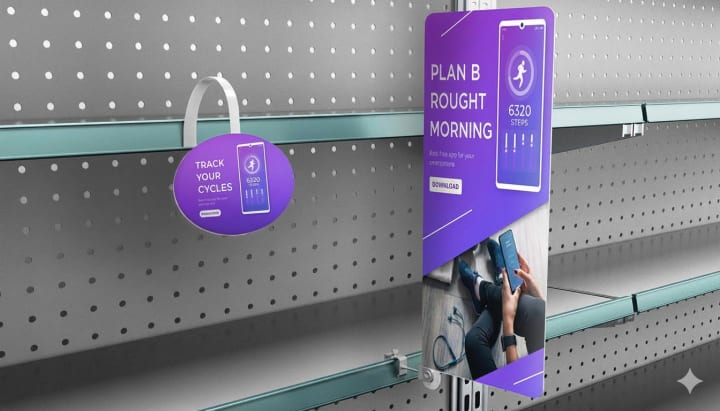
- Shelf, end-cap, point-of-purchase, and merchandising-fixture inserts.
- Menu, price, information, and queue displays that fit a supported frame or channel.
- Event and indoor wayfinding graphics where low weight helps handling.
- Frame, stand, stanchion, and holder inserts measured to the actual hardware.
- Gentle curved-display applications after stock, bend direction, radius, and retention are tested.
Choose Your Sign Options
Sign details
- Material
- Polystyrene (styrene) plastic sheet
- Surface
- Smooth printed face with finish and color behavior confirmed for the selected stock
- Artwork
- Full-color layout prepared for finished size, viewing distance, bleed, trim, and effective image resolution
- Thickness
- Stock selected from currently available options based on flex, dimensions, fixture, support, and handling
- Sides
- One- or two-sided graphics subject to stock, opacity, mounting, curl, and display requirements
- Use
- Primarily protected indoor signage; exterior or high-heat use requires a different material review
- Finishing
- Trim shape, corners, and any customer-approved hole pattern confirmed against production and fixture limits
Available options
- Thickness selected for desired rigidity or flex, finished span, fixture clearance, and mounting.
- One- or two-sided layouts with the same or different artwork when the chosen build supports both faces.
- Square or rounded corners coordinated with the holder, handling, and exposed-edge condition.
- Drilled holes only after you or your installer supplies and approves diameter, center location, and edge clearance.
- Custom dimensions fitted to measured frames, stands, channels, shelves, and retail fixtures.
- Alternative rigid substrates when the panel must remain flat across a wide or exposed unsupported span.
Preparing files? Start with the artwork setup guide.
How We Make Your Sign
-
1) Measure the display
Send customer-verified exact finished size, quantity, fixture opening and channel depth, support points, desired curve or rigidity, viewing sides, exposure, handling routine, and any approved hole diagram.
-
2) Prepare the artwork
Provide a vector PDF when possible or a raster file with enough effective resolution at final size, plus bleed, safe margins, fonts, linked images, and final copy.
-
3) Approve stock + finishing
Confirm current thickness availability, print faces, trim, corners, exact holes, orientation, opacity expectations, and any sample-fit requirement.
-
4) Print and protect the order
The approved sheets are printed, cut, drilled when specified, inspected, and protected for the customer or third-party installer.
Questions About This Sign
What are styrene signs?
They are printed graphics made on thin polystyrene sheet. The material is lightweight and can have limited flex, making it useful for protected indoor display inserts, merchandising fixtures, menus, and temporary information panels.
Does styrene bend?
It can flex, but bend behavior changes with thickness, sheet orientation, temperature, radius, and frequency. Do not assume every stock can be rolled or repeatedly bent; provide the fixture radius or request a sample test for a curved application.
What thickness should I choose?
Choose from current stock after considering finished size, desired flex, unsupported span, fixture clearance, clips or channels, exposed edges, holes, handling, and temperature. A more rigid material may be better when flatness is critical.
Can you print styrene double-sided?
Two-sided graphics may be possible, but stock, opacity, color show-through, curl, handling, mounting, and production setup need review. State whether each side has the same or different artwork and how both faces will be viewed.
Can I get rounded corners or holes drilled?
Those finishing options can be evaluated. Supply the approved corner radius, hole diameter, exact center locations, and edge clearance; small clearances or unsupported holes can create weak points. Fixture load and mounting design remain you or your installer’s responsibility.
What’s the best file format for printing?
A press-ready PDF is a strong starting point, with vector AI, EPS, or SVG source files helpful for logos and type. Raster PNG or JPG art should have enough effective resolution for the finished size and viewing distance, with bleed when color reaches the trim.
How do I mount a styrene sign?
Mounting is a customer or third-party-installer decision. Channels, frames, clips, approved holes, or tested adhesive systems can behave differently with the sheet, wall or fixture, load, duration, and removal goal. Valley Sign Guys does not verify the receiving surface or design the attachment.
Will styrene scratch or fade?
The printed face can scuff, scratch, distort, or change with abrasion, cleaners, UV, heat, moisture, and handling. Treat it primarily as a protected indoor display material and define care and replacement expectations for the actual use.
What comes with a styrene print order?
The finished order contains the approved printed sheets with the quoted thickness, sides, trim, corners, and selected drilling, protected for the customer. Field measurements, site surveys, fixture or mounting design, structural decisions, permits, access, and installation are not included.
Compare display substrates
Related printing service
See commercial printing for approved-file preparation, printing, cutting, and finishing.