
Acrylic Blade Sign Project
This past storefront project shows how an acrylic panel, projecting frame, sightlines, and clearances work together. Valley Sign Guys makes custom signs for Phoenix-area customers, with installation handled separately.
Key takeaways
- This past project shows an acrylic blade-sign panel held within a projecting storefront frame.
- Blade signs face approaching sidewalk and street traffic, so sightline and message simplicity often matter more than adding sign area.
- Panel, frame, bracket, attachment, wall construction, clearance, and environmental exposure have to be evaluated as one system.
- For current projects, the customer and qualified installer provide verified dimensions, approved mounting details, landlord criteria, permits, and site decisions before production.
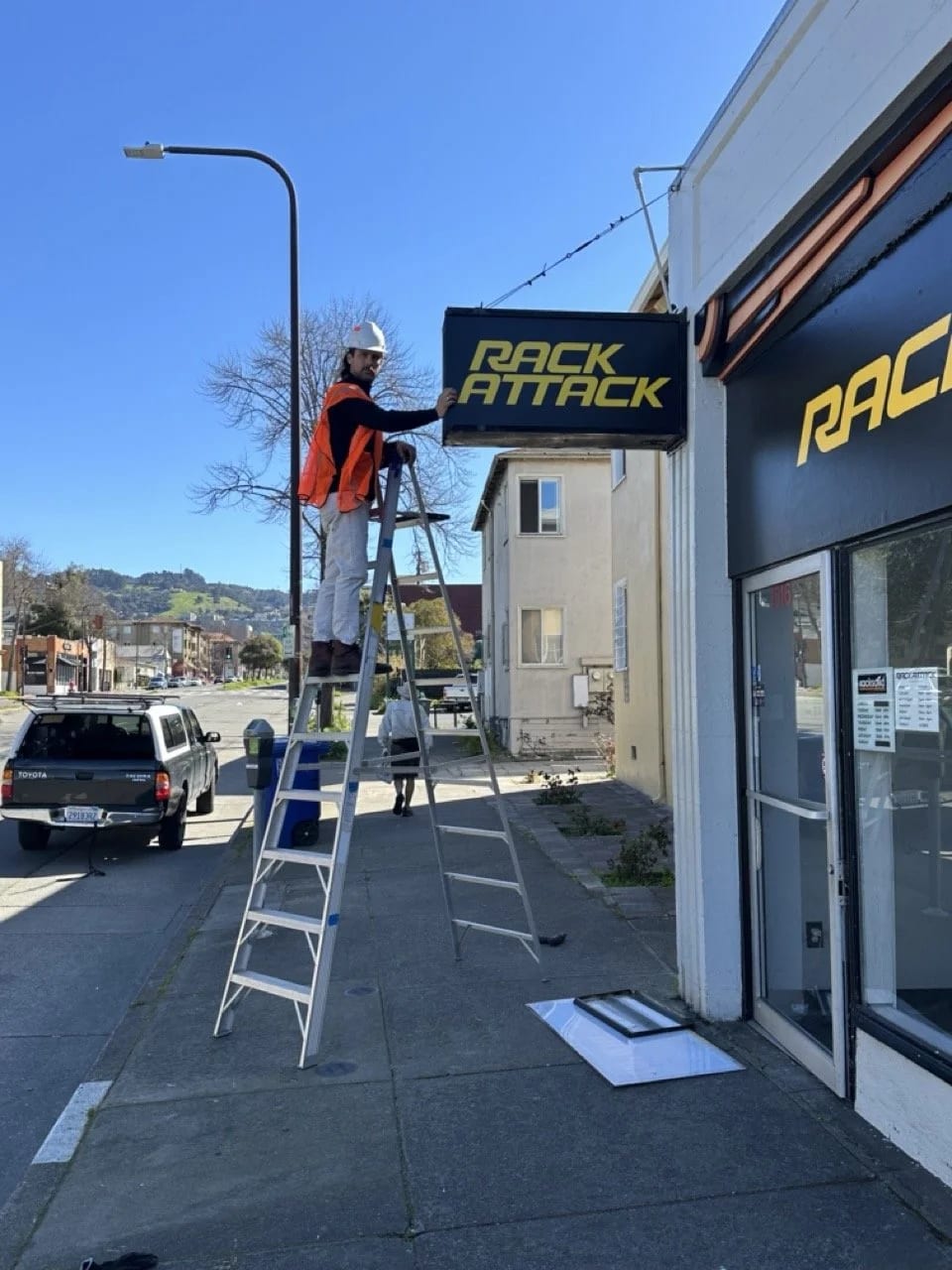
This past project shows a projecting acrylic blade sign installed within a storefront frame. Valley Sign Guys makes comparable custom signs for Phoenix-area customers and does not provide installation.
The documented sign uses a plexiglass (acrylic) panel held in a projecting frame. That format gives the storefront a readable face for people approaching along the sidewalk rather than only for someone standing across from the facade.
Current Valley Sign Guys work is production only. For a new blade-sign component, the customer and qualified professionals must supply verified final dimensions, an approved frame and mounting design, structural and electrical decisions, landlord approval, permits, code criteria, access planning, and installation.
What makes a blade sign effective?
Unlike a flat wall sign, a blade sign projects perpendicular to the facade. It can become legible earlier for pedestrians and slow-moving traffic approaching from either direction, provided its placement, lettering, contrast, and surrounding obstructions are planned together.
Huston Signs' blade-sign overview similarly describes the format in terms of perpendicular projection and approach visibility. That visibility is not automatic: a tree, awning, neighboring sign, deep arcade, or overly detailed face can still block the read.
What the acrylic panel contributes
The project specification identifies the face as plexiglass, a common name for acrylic. In a framed blade sign, acrylic can offer:
- Lower panel weight: useful within a properly designed frame, without removing the need to calculate bracket and attachment loads.
- A smooth sign face: suitable for compatible color, print, or applied-graphic systems.
- Fabrication options: acrylic can be cut and finished in different shapes and thicknesses when edge support and movement are accounted for.
“Acrylic” alone is not a durability specification. Grade, thickness, UV suitability, graphics, frame support, edge clearance, heat buildup, impact exposure, and cleaning method all affect performance.
What the completed sign shows
The project image shows the acrylic panel, projecting frame, and installed result. For a similar sign, ask your installer to confirm the items below before anyone drills into a facade:
- Site and sightline review: Document the wall, trim, awnings, utilities, pedestrian path, and directions from which the sign must read.
- Bracket and attachment design: Match loads and fasteners to the actual wall assembly, sign weight, projection, wind exposure, and any engineering or approval requirements.
- Panel fitting: Support the acrylic without pinching its edges or preventing necessary material movement.
- Final alignment and clearance: Confirm level, projection, pedestrian clearance, neighboring conditions, and visibility before closing out the work.
The media at the top shows this past project in progress, but it is not a universal installation instruction. Attachment and access decisions belong with qualified people who can inspect the current site.
What to send for an acrylic blade-sign quote
Tinkering Monkey's blade-sign examples are useful for visual inspiration, not code or structural guidance. For a current project, start with the site:
- Document the real approach: Customer-supplied photos from both directions of travel help keep the face simple enough to read in the available time.
- Send final dimensions and construction: Provide the approved panel and frame sizes, material, finish, and quantity. Your installer or engineer supplies the mounting pattern, clearances, structural requirements, and any electrical interface that affects the components we make.
- Confirm property and jurisdiction criteria: The customer is responsible for landlord approval, permits, code compliance, and current requirements for the project address.
- Specify exposure: Customer- or installer-supplied information about salt, moisture, heat, UV, wind, shade, and irrigation informs material and finish choices.
- List what the installer needs: Identify the labels, drawings, approved hardware specifications, packaging, and assembly notes that should accompany the sign components.
Need an acrylic blade-sign panel for a Phoenix-area project?
Review our custom acrylic signs and installer information guide. Then ask us for a sign quote and send approved artwork, final dimensions, panel and frame specifications, finish requirements, quantity, and any details approved by your installer. Site surveys, field measurements, permits, engineering, electrical work, access coordination, and installation are not included.
FAQ
What is a blade sign?
A blade sign (also called a projecting sign, flag sign, or hanging sign) mounts perpendicular to a building facade. This orientation makes it visible to pedestrians and drivers approaching from either direction along the sidewalk or street.
What does this acrylic blade-sign project show?
This past project shows an acrylic sign panel installed within a projecting storefront frame. Valley Sign Guys makes comparable custom signs for Phoenix-area customers, with installation handled separately.
What should be checked before a blade sign is fabricated?
Confirm the viewing approach, wall construction, bracket and attachment design, projection and pedestrian clearances, wind exposure, access, landlord criteria, and applicable municipal requirements. Acrylic grade, thickness, edge support, and movement also need to match the frame.
Do blade signs require a permit?
Requirements vary by jurisdiction, property, sign type, and scope. Check the current rules with the authority responsible for the project address and obtain landlord approval where required. A past project example is not approval guidance for a new site.
Does Valley Sign Guys install blade signs now?
No. Valley Sign Guys currently provides production only. The customer and qualified installer are responsible for final field dimensions, mounting and structural design, permits, code compliance, access, electrical decisions, and installation.